Hematology · Report Format
Total Leucocyte Count (TLC) Report Format — Sample & Free Download
A Total Leucocyte Count (TLC) measures the total number of white blood cells in the blood, giving a quick standalone check of infection-fighting capacity and immune status when a full CBC isn't needed.
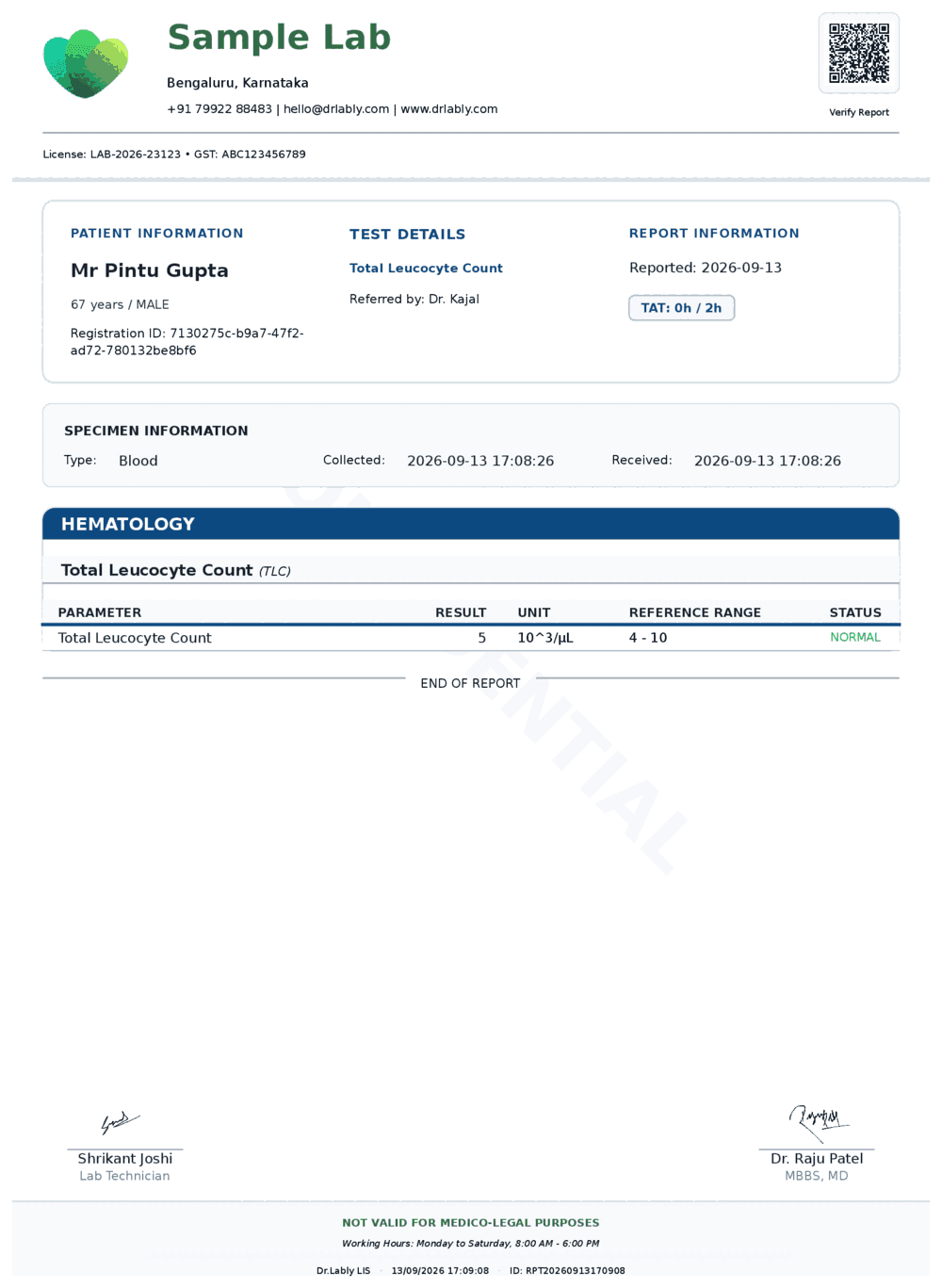
This is a real report generated by Dr.Lably LIS — not a mockup.
When is it ordered?
- Quick infection or inflammation screening when a full CBC isn't required
- Monitoring white cell counts during chemotherapy or immunosuppressive therapy
- Investigating fever, fatigue, or suspected infection
- Follow-up tracking after a previous abnormal white cell count
Test details
- Specimen type
- Whole blood (EDTA)
- Turnaround time
- Same day (2 hours)
Total Leucocyte Count report format breakdown
| Parameter | Unit | Normal range | What it means |
|---|---|---|---|
| Total Leucocyte Count | 10^3/µL | 4 - 10 | Low counts may reduce infection-fighting ability and can occur with viral infections or bone marrow suppression; high counts often indicate bacterial infection, inflammation, or a stress response. |
Frequently asked questions
What does a TLC report format show?
The report lists a single Total Leucocyte Count result with unit, reference range, and status — as shown in the sample report above.
Do I need to fast before a TLC test?
No fasting is required for a standalone TLC test.
What does a high TLC mean?
A high white cell count often points to infection, inflammation, or a stress response, though the exact cause needs clinical evaluation by a doctor.
How is TLC different from a full CBC?
TLC reports just the total white cell count, while a CBC breaks it down further into differential counts (neutrophils, lymphocytes, etc.) alongside red cells and platelets.
Related report formats
Generate reports like this for your lab
Dr.Lably LIS generates this exact report format automatically for every total leucocyte count — with your lab's branding, QR verification, and WhatsApp/email delivery built in.
This page is for informational purposes only and is not a substitute for professional medical advice or diagnosis. Reference ranges shown are illustrative and may vary by lab, analyzer, age, gender, and methodology — always interpret results with a qualified physician.