Hematology · Report Format
Complete Blood Count (CBC) Report Format — Sample & Free Download
A Complete Blood Count (CBC) measures the three main cell types in blood — red blood cells, white blood cells, and platelets — along with related indices like hemoglobin and hematocrit. It's one of the most commonly ordered lab tests and gives a broad first look at a patient's overall health, blood-forming ability, and immune status.
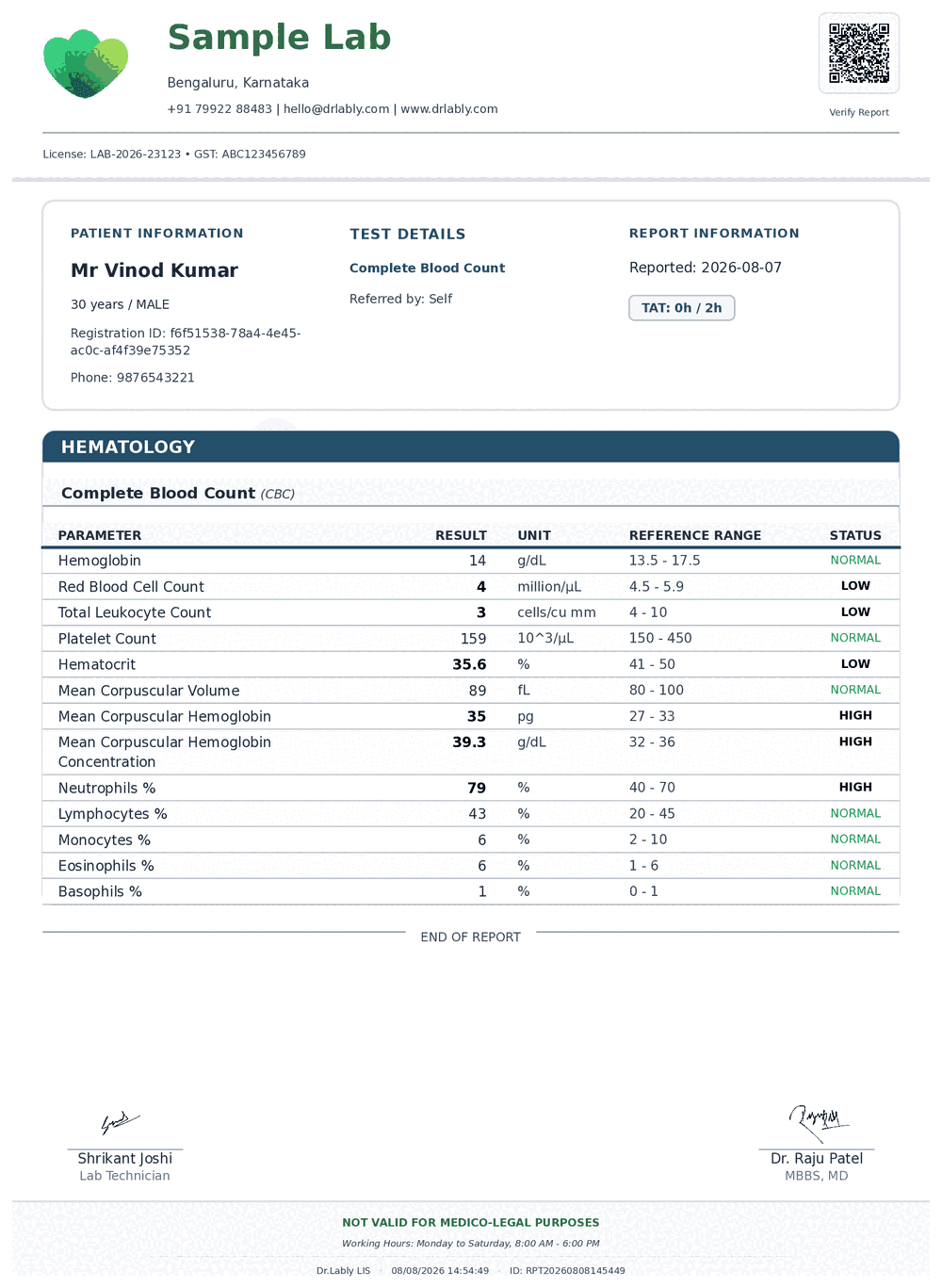
This is a real report generated by Dr.Lably LIS — not a mockup.
When is it ordered?
- Routine health checkups and pre-employment or pre-surgery screening
- Investigating fatigue, weakness, or unexplained bruising
- Monitoring anemia, infection, or bleeding disorders
- Tracking response to treatments that affect blood cell counts, such as chemotherapy
Test details
- Specimen type
- Whole blood (EDTA)
- Turnaround time
- Same day (2 hours)
Complete Blood Count report format breakdown
| Parameter | Unit | Normal range | What it means |
|---|---|---|---|
| Hemoglobin | g/dL | 13.5 - 17.5 | Low levels often point to anemia; high levels can occur with dehydration or chronic low-oxygen conditions. |
| Red Blood Cell Count | million/µL | 4.5 - 5.9 | Low counts are common in anemia or blood loss; high counts can occur with dehydration or certain bone marrow conditions. |
| Total Leukocyte Count | cells/cu mm | 4 - 10 | Low counts may reduce infection-fighting ability; high counts often indicate infection, inflammation, or stress response. |
| Platelet Count | 10^3/µL | 150 - 450 | Low counts increase bleeding risk; high counts can occur with inflammation or certain bone marrow conditions. |
| Hematocrit | % | 41 - 50 | Tracks the proportion of blood that is red blood cells; trends together with hemoglobin and RBC count. |
| Mean Corpuscular Volume | fL | 80 - 100 | Helps classify anemia as small-cell (low MCV), normal-sized, or large-cell (high MCV). |
| Mean Corpuscular Hemoglobin | pg | 27 - 33 | Reflects the average hemoglobin content per red blood cell; moves in line with MCV in most anemias. |
| Mean Corpuscular Hemoglobin Concentration | g/dL | 32 - 36 | Indicates how concentrated hemoglobin is within red blood cells; helps distinguish types of anemia. |
| Neutrophils % | % | 40 - 70 | Often rises with bacterial infection or acute stress; can fall with certain viral infections or bone marrow suppression. |
| Lymphocytes % | % | 20 - 45 | Often rises with viral infections; can fall with immune suppression or certain treatments. |
| Monocytes % | % | 2 - 10 | Can rise with chronic infections or inflammatory conditions. |
| Eosinophils % | % | 1 - 6 | Often rises with allergies, asthma, or parasitic infections. |
| Basophils % | % | 0 - 1 | Rarely elevated; can rise in some chronic inflammatory or blood disorders. |
Frequently asked questions
What does a CBC report format look like?
A Dr.Lably CBC report shows patient and specimen details at the top, followed by a parameter table listing each blood count (hemoglobin, RBC, WBC, platelets, and indices) with the result, unit, normal reference range, and a NORMAL/HIGH/LOW status — the same format shown in the sample above.
Does a CBC require fasting?
No. A Complete Blood Count doesn't require fasting, so it can be drawn at any time of day.
How long does a CBC report take?
Most labs, including Dr.Lably-powered labs, turn around a CBC report the same day — typically within 2 hours of sample collection.
Can I download this CBC report format for free?
Yes. The PDF and editable Word versions above are free to download, no signup required.
Related report formats
Generate reports like this for your lab
Dr.Lably LIS generates this exact report format automatically for every complete blood count — with your lab's branding, QR verification, and WhatsApp/email delivery built in.
This page is for informational purposes only and is not a substitute for professional medical advice or diagnosis. Reference ranges shown are illustrative and may vary by lab, analyzer, age, gender, and methodology — always interpret results with a qualified physician.