Biochemistry · Report Format
Lipid Profile Report Format — Sample & Free Download
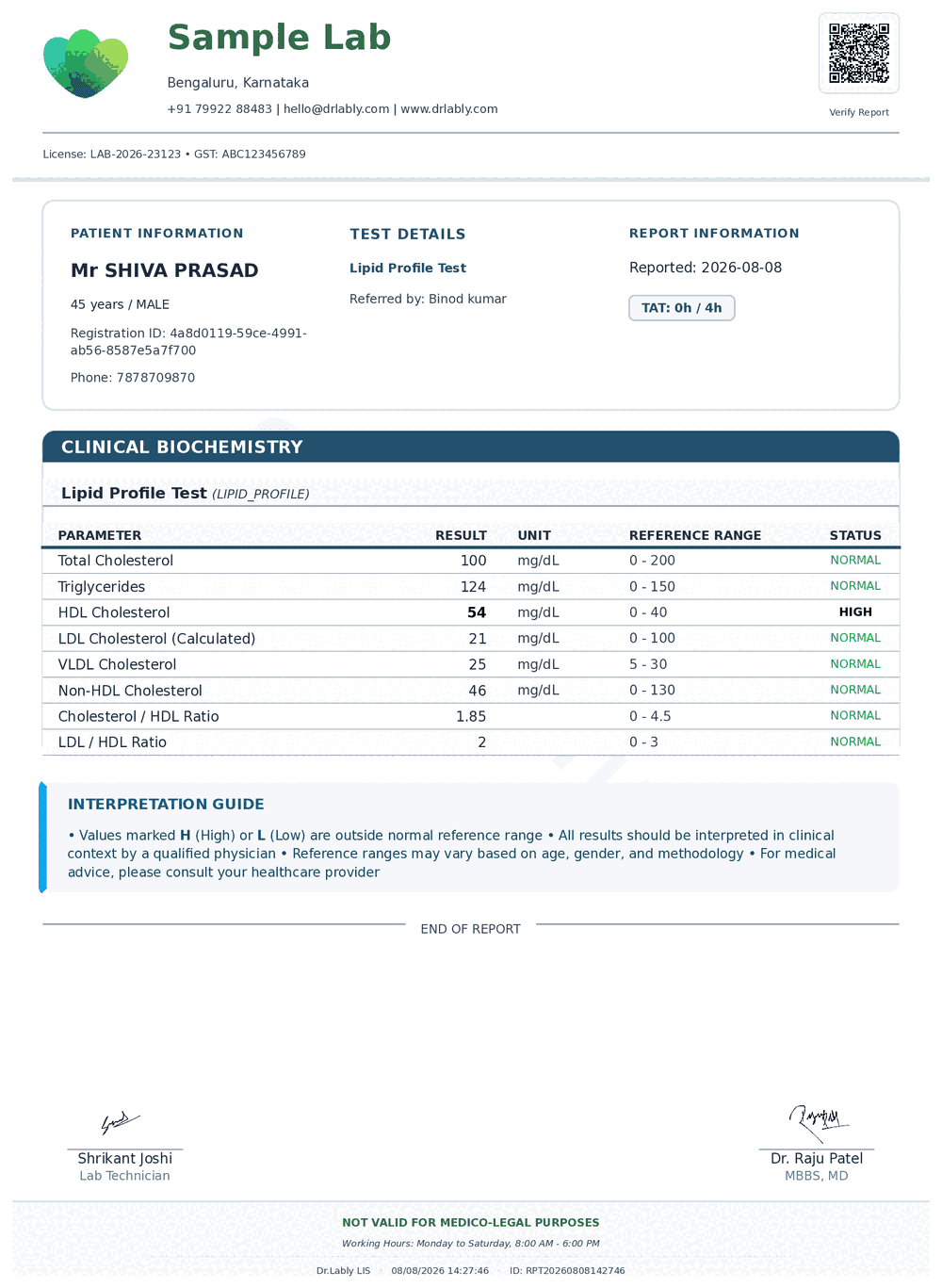
A Lipid Profile measures the fats (lipids) circulating in the blood — total cholesterol, triglycerides, HDL ('good') cholesterol, LDL ('bad') cholesterol, VLDL, and related ratios — to assess cardiovascular risk.
This is a real report generated by Dr.Lably LIS — not a mockup.
When is it ordered?
- Routine cardiovascular risk screening, especially after age 20 or 30
- Family history of heart disease, high cholesterol, or stroke
- Monitoring patients with diabetes, high blood pressure, or obesity
- Tracking response to cholesterol-lowering medication or lifestyle changes
Test details
- Specimen type
- Serum
- Turnaround time
- Same day (4 hours)
- Preparation
- 9-12 hours fasting is usually required; water is allowed.
Lipid Profile Test report format breakdown
| Parameter | Unit | Normal range | What it means |
|---|---|---|---|
| Total Cholesterol | mg/dL | 0 - 200 | High levels raise long-term cardiovascular risk; interpreted alongside the individual cholesterol fractions below. |
| Triglycerides | mg/dL | 0 - 150 | High levels are linked to diet, alcohol intake, and metabolic conditions like diabetes; markedly high levels also raise pancreatitis risk. |
| HDL Cholesterol | mg/dL | 0 - 40 | Considered protective — higher HDL is generally favorable for heart health, while low HDL raises cardiovascular risk. |
| LDL Cholesterol (Calculated) | mg/dL | 0 - 100 | Often called 'bad' cholesterol — high levels are a key driver of plaque buildup in arteries. |
| VLDL Cholesterol | mg/dL | 5 - 30 | Carries triglycerides in the blood; tends to rise and fall with triglyceride levels. |
| Non-HDL Cholesterol | mg/dL | 0 - 130 | Combines LDL and other non-protective cholesterol types into one cardiovascular risk marker. |
| Cholesterol / HDL Ratio | — | 0 - 4.5 | A higher ratio indicates greater cardiovascular risk relative to protective HDL. |
| LDL / HDL Ratio | — | 0 - 3 | Another risk ratio; higher values indicate a less favorable cholesterol balance. |
Frequently asked questions
What does a Lipid Profile report format include?
A Lipid Profile report lists total cholesterol, triglycerides, HDL, LDL, VLDL, non-HDL cholesterol, and two risk ratios, each with its result, unit, reference range, and status, as shown in the sample report above.
Do I need to fast before a Lipid Profile test?
Most labs recommend 9-12 hours of fasting (water is fine) before a Lipid Profile, since eating can temporarily raise triglyceride levels.
What does high LDL cholesterol mean?
High LDL ('bad' cholesterol) generally increases long-term cardiovascular risk, but your doctor will interpret it alongside HDL, triglycerides, and your overall health profile.
How soon will I get my Lipid Profile results?
Dr.Lably-powered labs typically report Lipid Profile results the same day, often within about 4 hours of sample collection.
Related report formats
Generate reports like this for your lab
Dr.Lably LIS generates this exact report format automatically for every lipid profile test — with your lab's branding, QR verification, and WhatsApp/email delivery built in.
This page is for informational purposes only and is not a substitute for professional medical advice or diagnosis. Reference ranges shown are illustrative and may vary by lab, analyzer, age, gender, and methodology — always interpret results with a qualified physician.